FEO End Game(s)
The aim of End Games is to share ideas to gain a better understanding of the different ways businesses can mature overtime. This could include exit, partial sale, building a family legacy to pass on or carry on until you drop!
Date: 05 May 2026
Author: Jess Clark

I was thinking about what I’d do next. There wasn’t anyone coming through to do an MBO, so I knew it would probably be a trade sale.
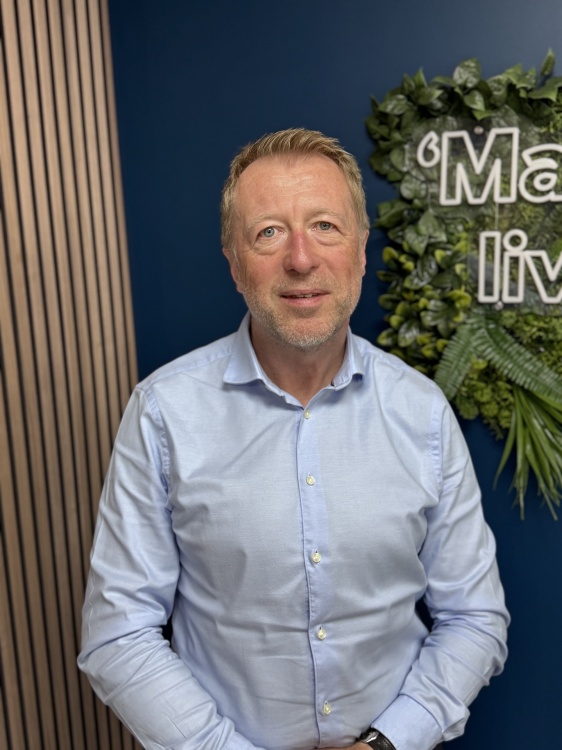
This conversation with Martin Shaw, took place the day after completing the sale of his business and gave him a moment to pause and reflect on a career shaped by hard work, resilience and a long relationship with For Entrepreneurs Only.
Martin has been an FEO member for many years, and says the network has played an important role in both his business and personal journey. Looking back on the day after completion, he described a mixture of relief and pride - not just in the deal itself, but in everything that led to it.
Martin joined FEO early in its journey and remembers some of the first meetings taking place during a period of economic uncertainty. What stood out to him was the honesty in the room.
“There were business people saying that if we needed to get ourselves out of the mess, the council and the government weren’t going to do it for us - we’d have to help ourselves,” he recalls. “That was really refreshing.”
For Martin, that realism has always been part of FEO’s appeal. It is a community made up of business owners who are willing to share the good, the bad and the lessons learned along the way.
“You get people talking about how they’ve done over time, and sometimes how things haven’t gone well and what they’ve done about it,” he says. “That has come to really help me, over the years.”
Martin’s route into business was not conventional, but it was shaped by an early willingness to work hard and learn on the job. He did not excel at school, and says he had to apply himself to succeed.
After school, he joined Asda as a management trainee and learned the business from the ground up. The role took him across Leeds, York and Wakefield before he was offered a move to Hull. From there, his career developed steadily across retail, wholesale and distribution.
Later, he completed a master’s in marketing while working, having first studied part-time at what was then Humberside University.
“The marketing side of a business studies degree was the bit I enjoyed most,” he says. “So, after switching jobs, I also switched courses to become a Chartered Marketer and obtain the master’s as it related most to what I wanted to do.”
“I’ve always had a hankering to have my own business,” he says. “When the opportunity came up, I took it.”
Martin’s move into business ownership came through an opportunity to buy into a company he already knew well, D3 Office Group, which was one of his customers in a previous job.
Over time, the business expanded from print and office supplies into a much broader offer, including furniture, workwear, PPE and interior fit-out. Through a mix of organic growth and acquisitions, Martin helped shape the business into something far more diverse than it had been at the outset.
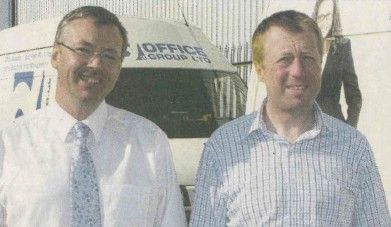
Just last year, Martin started to think seriously about succession and took part in FEO’s End Game (s) programme, which helped him step back and consider what the future might look like for both himself and the business.
“I was thinking about what I’d do next,” he explains. “There wasn’t anyone coming through to do an MBO, so I knew it would probably be a trade sale.”
The programme helped him think more clearly about the options. He realised that while he was not ready to stop working altogether, growing the business further would likely mean another major push and a different structure.
“I could probably have reinvented it and gone again,” he says. “But that would have meant four or five more hard years. I had to decide whether that was the right route, or whether the better solution was to sell to someone who could help the business grow further.”
For Martin, that was not just a commercial decision, but a personal one too. He wanted to make sure the business, and the people in it, had the best possible future.
Martin says finding the right buyer mattered just as much as the numbers. In this case, the business he sold to, Heatons, was one he already knew well and felt would be a strong cultural and commercial fit.
“The person buying the business I’ve known for 25 years,” he says. “He was a customer at a previous company I worked for, and we’ve collaborated on many things over the years. The fit is absolutely right.”
That fit mattered because Martin was not looking simply for the highest bid. He wanted a buyer who could continue to grow the business in the right way.
“They’re a bigger company than us, but they’ve been good at putting key people into management roles in the business,” he says. “They also have a succession plan, with the owner’s son moving through the ranks.”
The sale was structured as an asset, stock and goodwill transaction, which meant there was plenty to manage in the background. Martin says the final weeks before completion were filled with practical details, from managing the team, contracts and finances to systems and customer communication.
One of the biggest priorities was making sure customers were given enough notice, especially larger organisations and those with formal procurement processes. Martin says they were told around four weeks before completion, giving them time to prepare.
“We wanted to make it as pain-free as possible,” he says. “If someone wasn’t ready yet, we said we’d continue invoicing them through D3 until everything was set up.”
For Martin, that approach reflects one of the things he values most about the business: the relationships built over many years. The sale was a transaction, but it was also an extension of that trust.
Now that the deal is done, Martin says the first priority is making sure the transition is a success. Now, as a Heaton’s employee, he will begin thinking more seriously about what life might look like beyond the business.
Martin says FEO’s Endgame (s) programme played a key role in helping him think through all of this. It gave him the chance to step back, listen to others and consider his own options more clearly.
“It crystallised my decision,” he says. “I went into it thinking I might have an idea of what I was doing, but I came out of it thinking it was time to start planning properly.”
He says the biggest lesson was that there is no single right way to exit a business.
“Everybody’s story is different,” he says. “It isn’t just about selling. You have to think about what works for your business and your personal finances too.”
“The business has been a huge part of my life,” he says. “But now is the right time to go, and looking at this the day after the transaction has completed, it has been fairly quick and relatively smooth!”
To find out more about becoming and FEO member and/or taking part in End Games, please click HERE.









Email:
info@forentrepreneursonly.co.uk
Address:
For Entrepreneurs Only Quarry House, Hesslewood Office Park, Hessle, East Yorkshire, HU130LH