Date: 22 January 2026
Author: Jess Clark

I thought (in 1998), every day, thousands of customers must be walking into PC World asking the same question, and being sent elsewhere
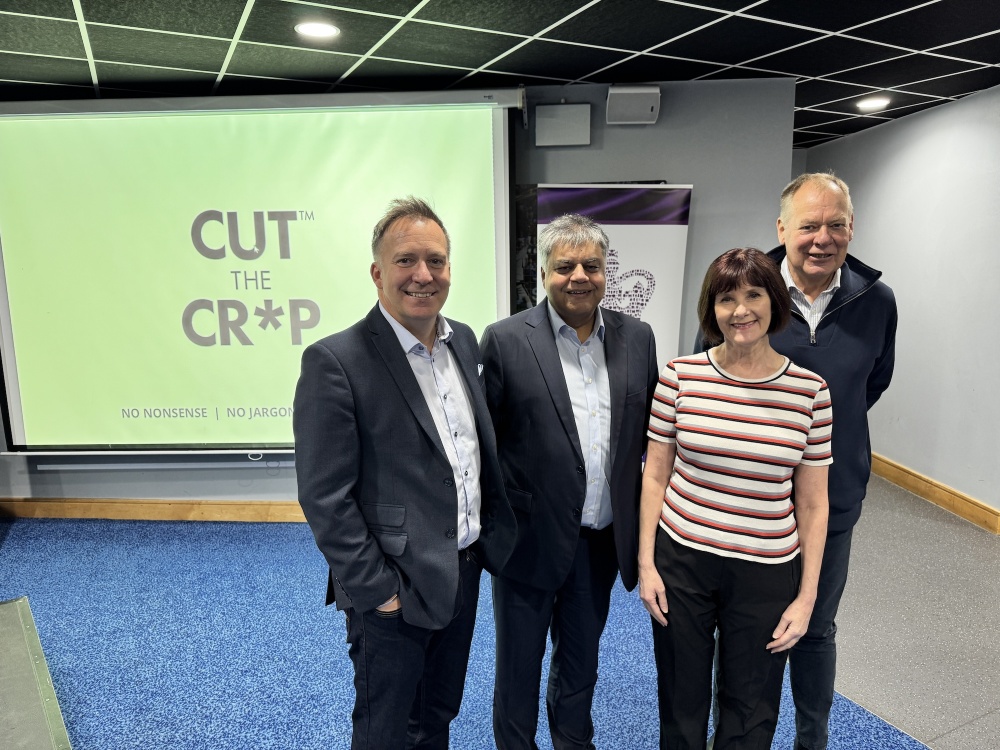
At 62, Ajaz hasn’t ‘worked’ since he was 36 years old. He is now a non-executive director, business advisor and inspirational speaker.
He built a career by doing two things exceptionally well: spotting the obvious before it becomes obvious to everyone else, and ignoring the word “no” when it is applied too quickly to a good idea. Speaking to members of For Entrepreneurs Only, he shared the story of how a “free” product became a multi-billion-pound business, and the practical business lessons he learned along the way.
His talk could be summed up in one line: make money by giving it away. Or, as Ajaz put it more bluntly, Freeserve was free, and “we made shitloads of money”.
Ajaz began not with technology, but with a memory from his school days. A Hovis TV advert stuck with him - an old man retiring, turning back one last time at the mill gates before going home to sit by the fire, reflecting on his life. The message haunted him. “Thousands of people retire every day, and many of them spend their final years thinking about what they could have done, should have done, but didn’t."
That moment shaped his ambition. When he retired, Ajaz wanted to look back and say he had made a difference.
Ironically, when he later left Dixons after 17 years to start Freeserve, his colleagues bought him a clock. It still sits on his fireplace as a reminder of that promise to himself.
Ajaz left school with no qualifications at all. He wanted to be a pilot but couldn’t. So he got a job – almost by accident – walking past a Dixons camera shop and applying to be a junior salesperson on £30 a week.
Retail turned out to be his education. Dixons expanded into Currys, selling white goods, and Ajaz rose quickly through the ranks; assistant manager, then store manager in Halifax, then larger and busier stores. Along the way, a management course taught him something that stuck for life - the biggest thing holding people back is what they believe about themselves.
Ajaz carried a simple message: “I’m as good as everyone else, and I can do anything.” That belief gave him the confidence to apply for – and get – the role of manager of the busiest Dixons store in the north of England, Manchester Arndale, after less than a year as a manager.
The turning point came after Dixons acquired PC World. Ajaz instinctively knew that computers and technology were the future, so he joined the PC World management team in Leeds. There, he had his “eureka moment”.
He bought a computer and tried to get on the internet, but no one in the store could explain how. Eventually, after wrestling with technical jargon and confusing instructions, he got online and immediately realised two things: this was the future, and at this point, it was far too difficult to access.
He thought, “Every day, thousands of customers must be walking into PC World asking the same question, and being sent elsewhere.” His solution was simple and obvious: PC World should become an internet service provider and get to the customer first!
He pitched the idea to the managing director of PC World. The answer was no.
That rejection led Ajaz to one of his core themes: people say no to good ideas. Often not because the idea is bad, but because they can’t yet see it. He likened it to Peter Kay’s famous “garlic bread” joke – something so obvious in hindsight that it’s hard to believe it was ever rejected.
Ajaz didn’t give up. He kept thinking, reading, and refining the idea. A Vanity Fair article about the “new establishment” – people who controlled media, content and the internet - crystallised his thinking. The lesson was simple: successful entrepreneurs do the obvious before it becomes obvious to everyone else.
Eventually, he got a meeting with the group CEO of Dixons. This time, the idea landed. Dixons had 1,000 stores. Every computer sale could include a simple CD that got customers online instantly. No expensive marketing. No complexity. The homepage could even be “burnt in”, creating a valuable portal.
The CEO admitted he didn’t fully understand it – but crucially, he said yes.
Freeserve launched on 22 September 1998. Within hours, customers were picking up CDs in Dixons, Currys and PC World and going online. Within three months, Freeserve was the largest ISP in the UK, overtaking AOL and CompuServe.
Nine months later, it floated as a separate business in London and on NASDAQ, valued at £1.5 billion. At its peak during the dotcom boom, it was worth £9 billion – more than its parent company. In 2001, it was sold to France Telecom for £1.6 billion.
All from a product that was free.
So how did it make money? Two main ways. First, dial-up revenue sharing: tiny fractions of pennies per minute added up when customers were clocking up around five billion minutes a month. Second, the portal: search, partnerships, and shopping channels generated millions with minimal effort.
Customer acquisition – the hardest problem for most businesses – was the easiest part as they already had the customers. Freeserve initially employed just three people.
Ajaz doesn't sugar-coat his lessons. “Business is about money. Life isn’t fair. People don’t care about you – they care about themselves. Contracts matter. Partnerships fall apart. Employers will let you go when it suits them.
“Your biggest asset is you. No one will teach you what you need to know - you have to learn constantly, using whatever resources are available – and today, YouTube is the biggest free university in the world - use it.
“Companies must also learn to pivot. AOL and CompuServe didn’t react to Freeserve. Kodak ignored digital cameras. Blockbuster didn’t adapt. Customers don’t always know what they want – if Henry Ford had asked his customers, they’d have wanted a faster horse.”
Throughout the talk, Ajaz returned to a few recurring principles:
The story of Freeserve is ultimately not about the internet. It’s about belief, simplicity, timing, and the courage to persist when others say no. Because sometimes, the best ideas really are the ones everyone else dismisses as obvious - until it’s too late.
At Entrepreneurs Only (FEO), we understand that entrepreneurial success thrives on ongoing learning, valuable relationships, and fresh inspiration. Our guest speaker lunches go beyond ordinary presentations; they are thoughtfully curated events that ignite new ideas, provide meaningful engagement, and build authentic relationships within our special community.
For more information about FEO Membership, please visit our website
Apply for membership | For Entrepreneurs Only






Email:
info@forentrepreneursonly.co.uk
Address:
For Entrepreneurs Only Quarry House, Hesslewood Office Park, Hessle, East Yorkshire, HU130LH