
Date: 07 November 2026
Author: Jess Clark
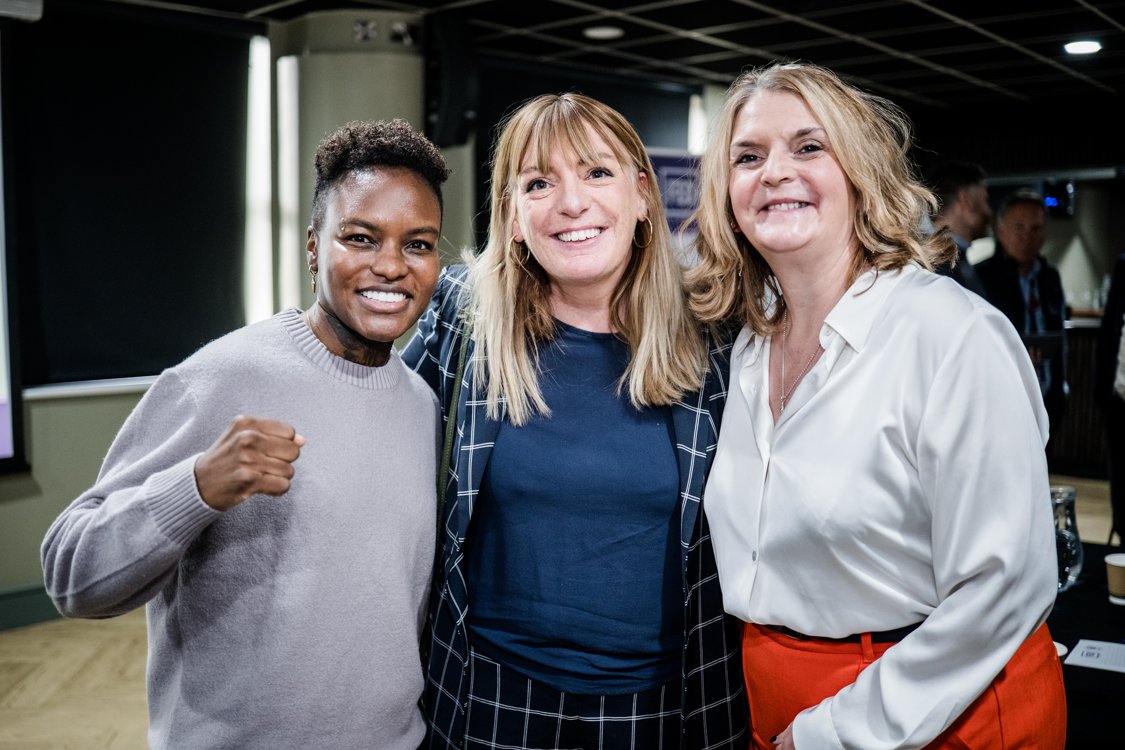

“They’ve always been watching a past version of myself,” she said. “By the time they get in the ring against me, there’s a completely new person.”
For Nicola Adams OBE, the double Olympic boxing champion, the answer was not simply to work harder. It was to keep evolving: setting smaller goals when the bigger picture felt impossible, learning from every defeat, building the right team, and refusing to let other people define what was possible.
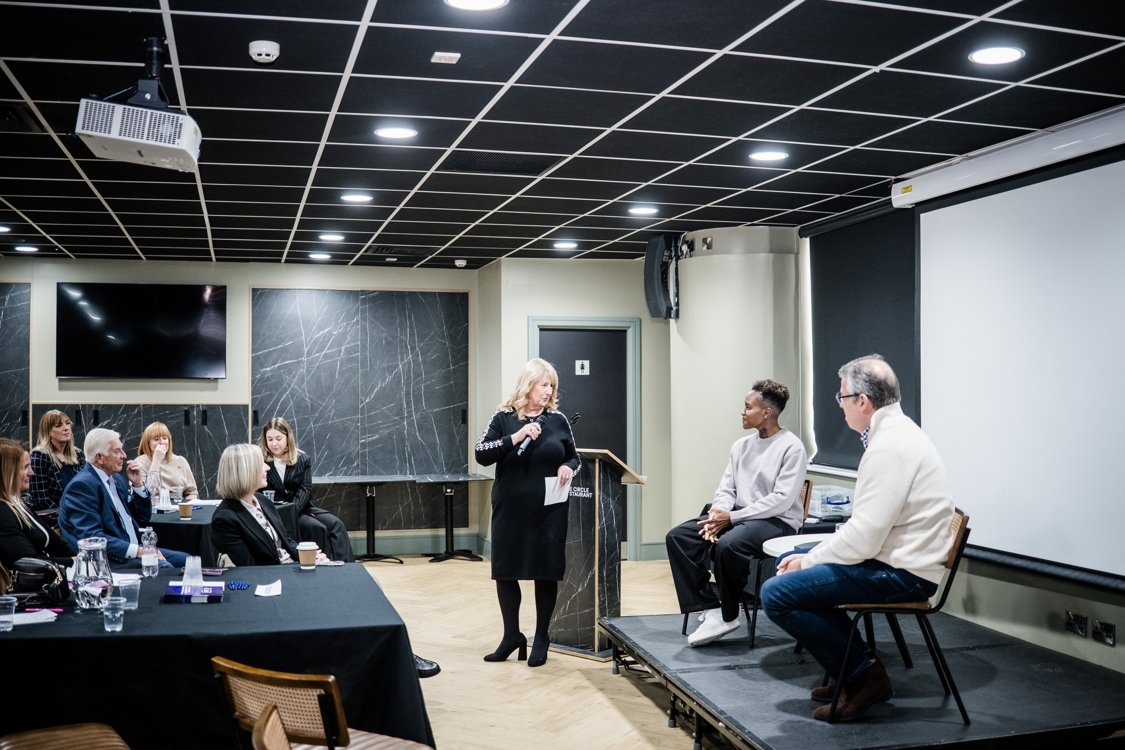
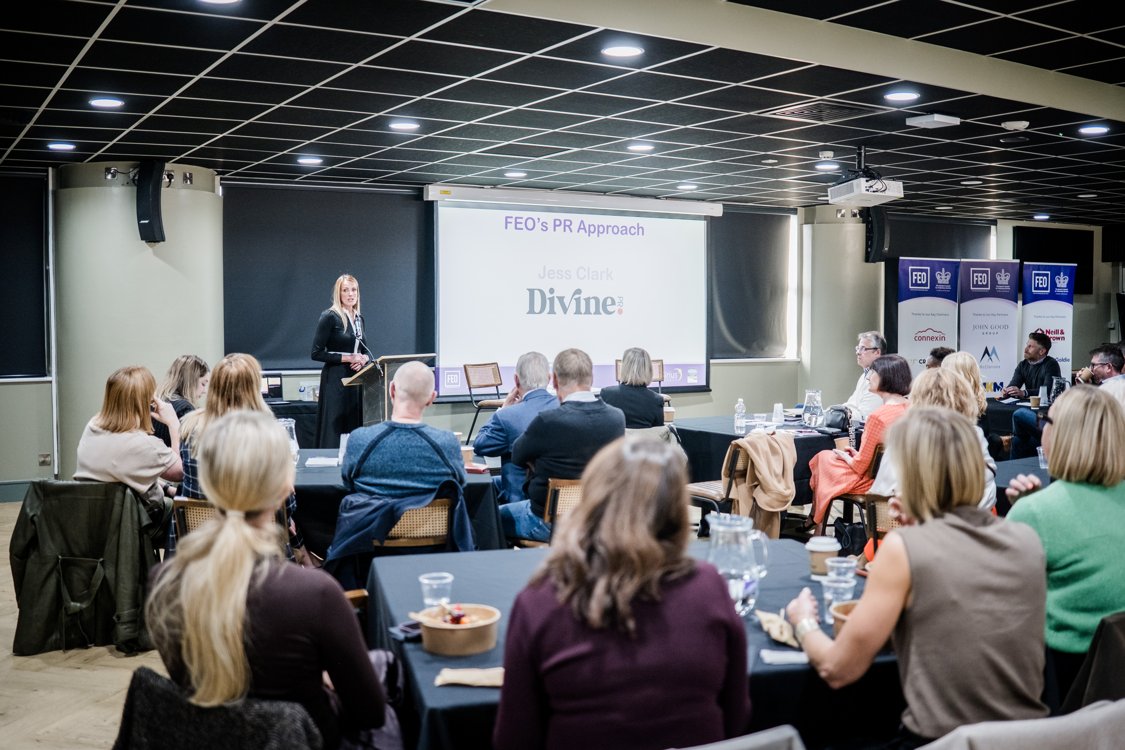
Speaking at FEO’s AGM in an interview with Blair Jacobs, Nicola brought humour, honesty and hard-won insight to an audience of entrepreneurs, members and partners. Her story may have begun in a boxing gym, but its lessons - resilience, reinvention, teamwork and relentless improvement - belong firmly in business.
Nicola’s route into boxing began by accident when she was 12 years old. She and her brother were taken along to a boxing class and she was hooked immediately
Nicola was 12. She was hooked almost immediately.
Inspired by Muhammad Ali, she loved the challenge of boxing - and the clear connection between effort and improvement. Football had frustrated her because she could not control what her teammates did. Boxing was different: success depended on her own preparation, strategy and ability to adapt.
“Boxing is like a game of chess,” she said. “You’re always thinking of different moves, different ways to outsmart your opponent.”
But opportunity was scarce. After winning her first fight at 13, she had to wait until 17 for another because suitable opponents were so difficult to find. Women’s boxing was not yet an Olympic sport, and some gyms would not even allow women to train.
Her family and coaches kept her focused on what she believed she could achieve. The lesson stayed with her: do not let other people’s limitations become your own.
In 2009, a fall down the stairs left Nicola with a fractured vertebra. At almost exactly the same time, she learned that women’s boxing would be included in the Olympics.
The opportunity she had spent years pursuing was finally becoming real - just as injury threatened to take it away.
Unable to train as normal, she faced months of rehabilitation and a future that felt uncertain. Her response was not to fixate on the Olympic podium. It was to make the next step manageable.
One early goal was simply to walk 50 metres without pain.
“I created small goals for myself,” she explained. “It just gave me that extra motivation to be able to say, ‘Look at what you’ve done so far.’”
Each milestone became evidence of progress. The Olympics remained the destination, but the route there was built one achievable step at a time.
It is a discipline many founders will recognise: when a business faces a setback, the path forward rarely appears all at once. The key is to identify the next meaningful action - and keep moving.
Weeks before London 2012, Nicola lost to China’s Ren Cancan at the World Championships.
Rather than treating the defeat as something to move past quickly, she wanted to understand it. She watched the fight back, identified what needed to change, and used it as information.
That same appetite for analysis applied to victories. Winning was never a reason to stop improving.
Her aim was simple: make sure anyone studying footage of her was preparing for a version of Nicola that no longer existed.
“They’ve always been watching a past version of myself,” she said. “By the time they get in the ring against me, there’s a completely new person.”
Only one boxer steps into the ring. But Nicola was clear that success is never an individual achievement.
Coaches, psychologists, nutritionists, physiotherapists and performance analysts all helped her perform at her best. Analysts studied opponents’ habits and tactics. Psychological support helped her develop visualisation techniques and a structured competition routine.
When she turned professional, however, she faced a new challenge: choosing her own team.
Talent alone was not enough. The specialists around her needed to communicate, collaborate and pull in the same direction.
It is a lesson that translates directly into growing a business. A strong team is not simply a collection of capable people. It is a group aligned around a shared goal, with clarity about who does what - and trust enough to challenge one another when it matters.
By the time Nicola reached the London 2012 final, the stakes had become bigger than her own ambition.
A conversation with her coach made her realise what winning could mean for women’s boxing - and for the girls watching who might, for the first time, see a future for themselves in the sport.
“This is actually way bigger than me,” she recalled thinking.
The support she received, particularly from Yorkshire, was unforgettable. Yet her response during a BBC interview, to winning gold was wonderfully understated: “It made my day.”
She already knew she wanted to return for a second Olympics. But maintaining that ambition across another four years required more than enthusiasm.
Sometimes progress meant returning to the basics: footwork, the jab, and the repetitive work that underpinned everything else. At other times, it required a more immediate incentive.
Nicola persuaded her coaches that winning gold at a tournament should earn her a week off. Anything less meant training again on Monday.
From then on, she joked, she was “boxing for the week off”.
Behind the humour is a useful point for any leader: motivation is not constant. Big ambitions matter, but so do short-term wins, recognition and reasons to keep showing up.








Email:
info@forentrepreneursonly.co.uk
Address:
For Entrepreneurs Only Quarry House, Hesslewood Office Park, Hessle, East Yorkshire, HU130LH