
Date: 23 September 2026
Author: Jess Clark

When you know where you want to go, all those thousands of little decisions you make every day start pointing in that direction.

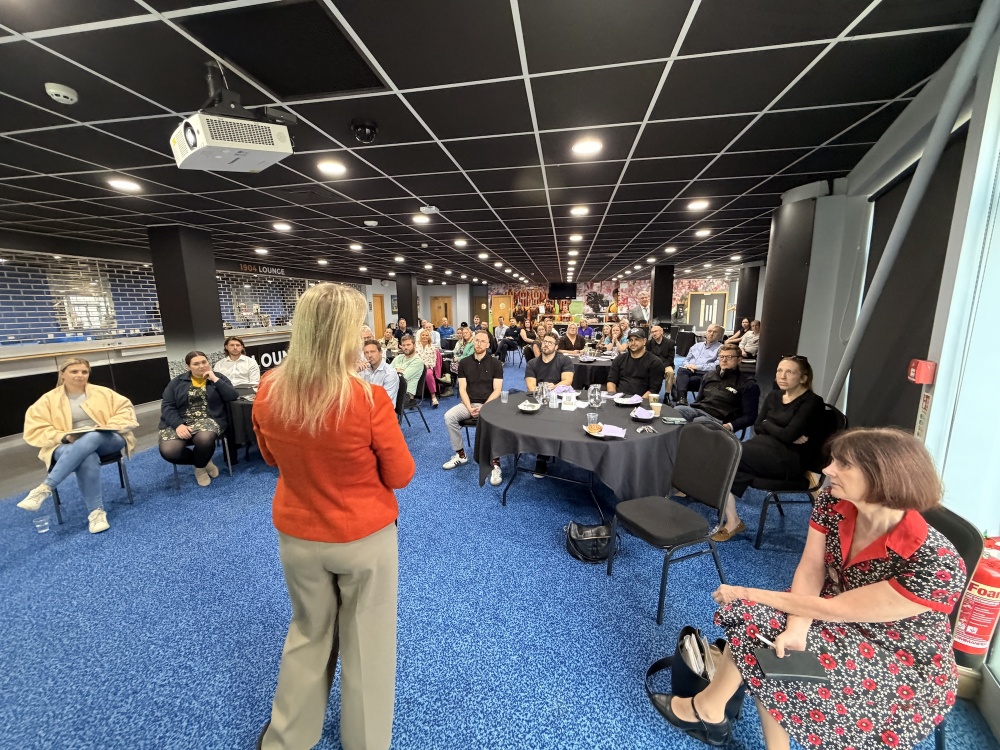
Internationally respected business leader, board chair, author and neurodiversity advocate Professor Charlotte Valeur shared candid reflections from more than four decades in business, banking, governance and boardroom leadership at FEO’s latest Guest Speaker Lunch.
Her message was both reassuring and challenging: business owners do not need all the answers, but they do need the curiosity, self-awareness and courage to keep asking better questions.
“We don’t grow when people agree on everything,” Professor Valeur told guests. “That’s how I grow - when people challenge what I say.”
Professor Valeur began by tackling one of the less glamorous but valuable areas of business leadership: governance.
Rather than bureaucracy reserved for large corporates, she described it as a practical framework that helps businesses make sound decisions, manage risk and demonstrate financial discipline. It can also make a company more attractive to investors, partners and potential buyers.
For owner-managed businesses, governance does not need to mean endless meetings. It can involve clear financial processes, trusted advisers and regular time to review strategy, risk and performance.
Once those foundations are in place, governance should become “the music in the background”: an embedded way of working that supports the business without taking it over.
Professor Valeur also supported FEO’s ethos, asking members to consider how their business could continue to grow, adapt and retain value beyond its founder - whether through stronger systems, succession planning or a wider leadership team.
At the heart of Professor Valeur’s talk was a simple but powerful question: why does your business exist?
She encouraged members to look beyond turnover and profit. A clear purpose gives leaders direction when choices become difficult and helps align the many decisions made each day - from the opportunities pursued to the people they choose to work with.
“When you know where you want to go,” she said, “all those thousands of little decisions you make every day start pointing in that direction.”
This message resonates with FEO members balancing delivery, growth, staff, customers and future plans. Making time to reflect is not stepping away from the business; it is an investment in ensuring it is moving in the right direction.
Members were invited to reflect on questions including:
One of the strongest themes of the lunch was the value of constructive disagreement.
Professor Valeur warned against surrounding yourself with people who always agree. While agreement may feel comfortable, it can create groupthink, leave risks unexplored and prevent leaders from seeing weaknesses or opportunities in their plans.
“Diversity without permission to disagree is cosmetic,” she said.
Meaningful diversity, she explained, is about bringing different experiences, perspectives and ways of thinking into decisions - and creating an environment where people feel able to speak honestly without fear of dismissal or reprisal.
She offered a memorable uncomfortable truth for leaders: if nobody ever challenges you, it may be worth asking whether people feel safe enough to do so.
Professor Valeur also introduced the concept of “red teaming”: inviting trusted people to examine a proposal and identify why it might fail. For entrepreneurs, this could involve testing a new idea, investment, partnership or growth plan before significant time, money or reputation is committed.
Professor Valeur reminded members that some of a business’s most valuable assets are not shown on the balance sheet.
Trust, reputation, relationships and knowledge take years to build and can be lost quickly. She spoke about the importance of reliability, credibility and confidentiality, as well as keeping ego and self-interest in check.
Her own guiding values are collaboration, transparency and trust - values she has publicly shared as a way of holding herself accountable.
That openness also shaped her reflections on being autistic and having ADHD, diagnoses she received later in life after recognising traits that had been present since childhood.
Her point was not that every leader should disclose personal information, but that authentic leadership can give others confidence to be more open too.
“When you hide yourself, you don’t allow other people to come out,” she said. “But when you open up yourself, you allow other people to do the same.”
During the discussion, members explored difficult conversations, bullying and how to disagree with people who may react emotionally or defensively.
Professor Valeur’s advice was to lead with curiosity. Rather than escalating disagreement, she suggested asking open questions, understanding how another person has reached their view and identifying areas of common ground.
When defensiveness takes over, she cautioned, listening often stops. In those moments, it can be more productive to pause the conversation and return to it when both parties can engage constructively.
She also encouraged business leaders to develop mediation skills, which can help founders manage disagreement with teams, clients, suppliers, partners and fellow directors.
Professor Valeur’s session was a timely reminder of why FEO members make time in busy working lives to hear new perspectives, connect with peers and challenge their own thinking.
Her final message was clear: be purposeful, stay open to challenge, lead according to your values and never become too comfortable to keep learning.









Email:
info@forentrepreneursonly.co.uk
Address:
For Entrepreneurs Only Quarry House, Hesslewood Office Park, Hessle, East Yorkshire, HU130LH