FEO Step Change
The Step change for growth programme challenges ambitious owners of established businesses to let go to grow in order to take their business to the next level.
Date: 11 September 2026
Author: Jess Clark
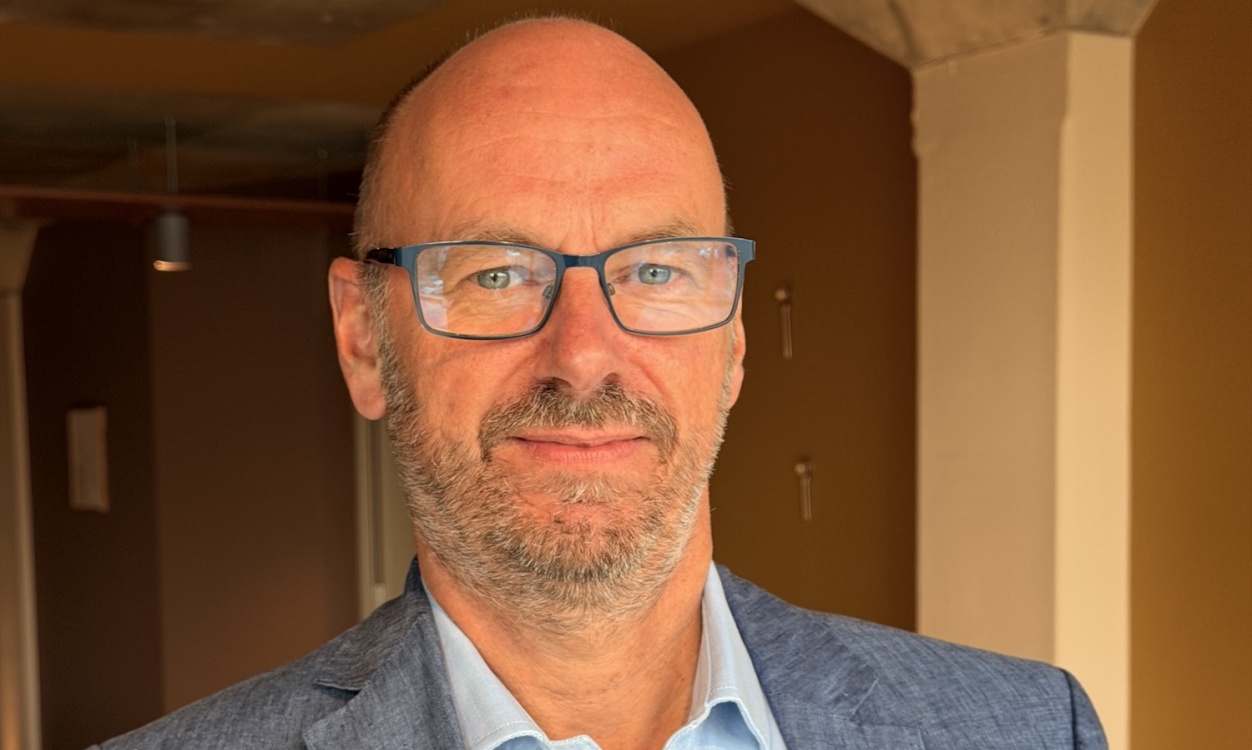

I didn’t realise that I had lost my mojo until I got it back. I feel like I did when I first started the business
Chris Whitelock’s career has always been shaped by curiosity, commercial instinct and a willingness to step into unfamiliar territory.
He began in the music industry, working for Vineyard Records, a specialist label and leading provider of contemporary gospel music. As General Manager and International Development Officer, he combined creative production with commercial discipline, growing the UK division.
The role demanded strategic thinking, people management and cross-cultural understanding. Chris worked with national offices around the world to streamline systems, improve efficiency and build more sustainable operations.
Those lessons have proved more transferable than they may first appear.
In 2006, Chris saw a news bulletin that changed his direction. A warning that the UK was heading towards an energy crisis, and that renewables would need to play a bigger part, stayed with him.
“I had a bit of an epiphany,” he says. “I thought, that’s what I’ll do.”
He was ready for a new challenge. While still working in music, Chris began researching the renewables sector during his evenings and weekends, supported by his then employer. He established Pure Renewables in 2007, initially operating from home while continuing to reduce his music-industry commitments.
The business began in the domestic market, building a reputation for specialist renewable-energy systems. By 2011, Pure Renewables had its first employees and its own premises. Over time, the business grew through technical expertise, strong customer relationships and an insistence on looking after projects from design through to long-term aftercare.
However, growth does not always mean doing more of the same.
As the domestic renewables market became increasingly crowded and price-driven, Chris and the board took the difficult decision to wind down the domestic business and concentrate fully on commercial and industrial projects.
It was not a decision taken lightly. In November last year, 13 people worked in the domestic operation. Some moved into the commercial business, while others found new roles or started their own companies. Pure Renewables worked to complete projects already under way, refund deposits where appropriate and help customers find trusted contractors to take work forward.
“The hardest part was sitting down with the staff and telling them,” Chris says.
For Chris, the decision also carried personal weight. He and his late wife, Janey, had built the domestic business together. Letting go of that chapter brought both sadness and relief.
Yet it also opened the door to a new phase.
Today, Pure Renewables focuses on large-scale commercial systems, including district heating and cooling, energy centres and data-centre cooling. Its work now includes major London developments, a Toronto airport-terminal project and a residential scheme in the Netherlands, alongside opportunities being developed in Ireland, Spain and Portugal.
Chris’s current focus is Saudi Arabia.
The business is establishing a presence in the country, where huge investment in infrastructure, tourism, data centres and major events is creating significant demand for energy-efficient cooling. Saudi Arabia’s Vision 2030 programme places sustainability and decarbonisation at the centre of its national development strategy.
Pure Renewables has developed a heat-pump-based approach that can reduce water use in data-centre cooling by up to 97%. That is especially valuable in Saudi Arabia, where water is expensive and energy-intensive to produce through desalination.
“It is a completely different world,” Chris says. “The scale of development is extraordinary.”
Working there has demanded the cross-cultural skills Chris first developed in music. Unlike the UK, where an initial meeting may quickly lead to a proposal, Saudi business relationships take time.
“You need to show that you are serious about being there for the long term,” he says. “They want to know they can trust you.”
Chris is travelling to Saudi Arabia roughly once a month, building relationships with major engineering, procurement and construction contractors. The plan is to start with project-by-project joint ventures, proving the model before committing to deeper partnerships.
The change has also brought Chris back to the part of business he enjoys most.
For a period, his role had become dominated by day-to-day management. He felt the business was running him, rather than the other way around. He did not immediately recognise that he had lost his motivation.
Looking back, the signs were there. He was tired, not looking forward to work and no longer feeling he was contributing in the way he wanted.
His wife, Karen, recently put it simply: “You have got your mojo back.”
Chris agrees.
“I didn’t realise that I had lost my mojo until I got it back. I feel like I did when I first started the business,” he says. “It is frontier-based again. I am developing new client relationships, exploring new markets and building something with a really good team behind me.”
Chris first joined FEO when its Ignition programme was known as Boot Camp, before later completing Step Change. The experience helped him see the importance of clear departments, defined responsibilities and recruiting people with the right expertise.
It was a shift that helped Pure Renewables grow into the more structured business it is today.
The group is on track for turnover of around £16m this year and has ambitions to reach £50m–£60m over the next five years.
For Chris, though, the measure of success is not simply scale. It is building a business that remains purposeful, adaptable and enjoyable to lead.






Email:
info@forentrepreneursonly.co.uk
Address:
For Entrepreneurs Only Quarry House, Hesslewood Office Park, Hessle, East Yorkshire, HU130LH