
Date: 30 June 2026
Author: Jess Clark
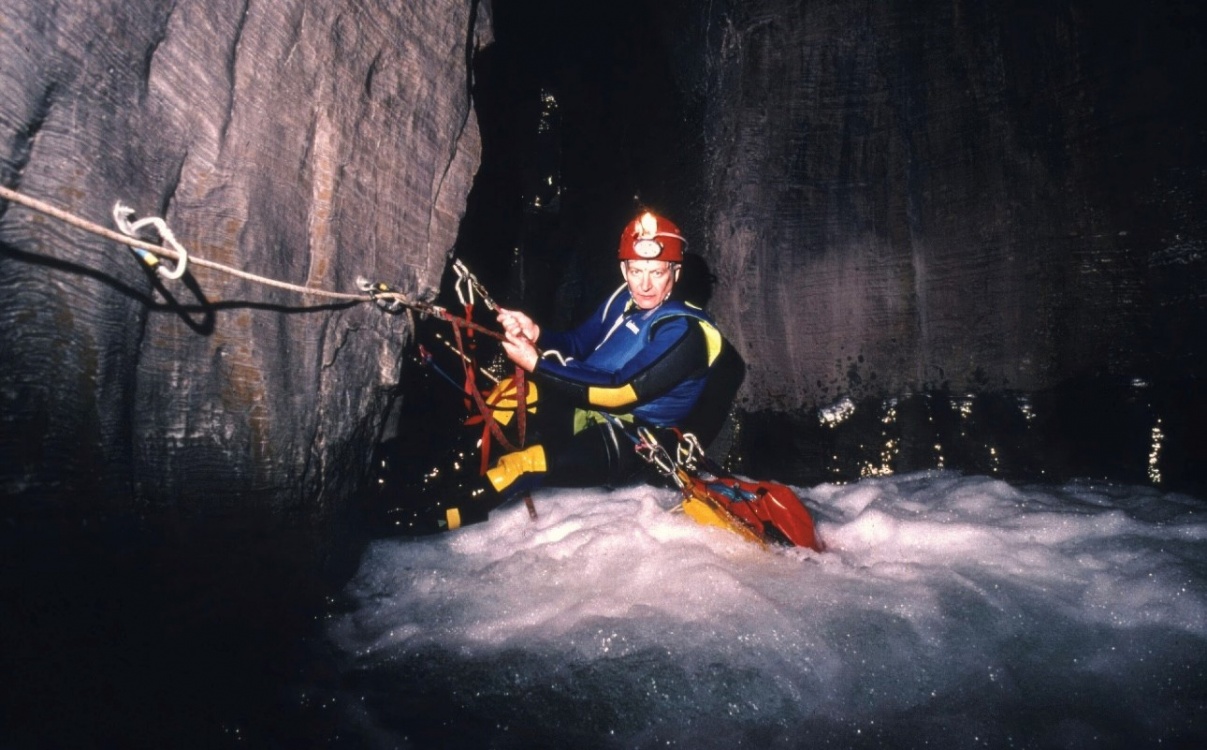

One of the most powerful presentations” since the organisation’s founding.
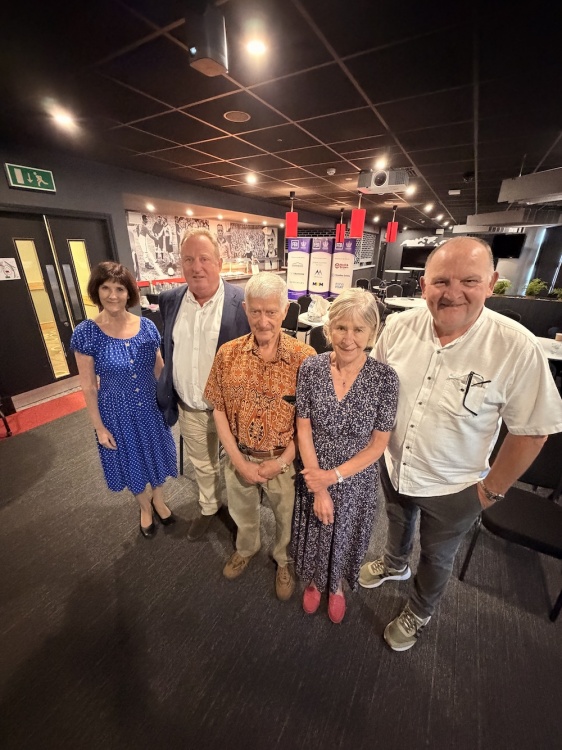
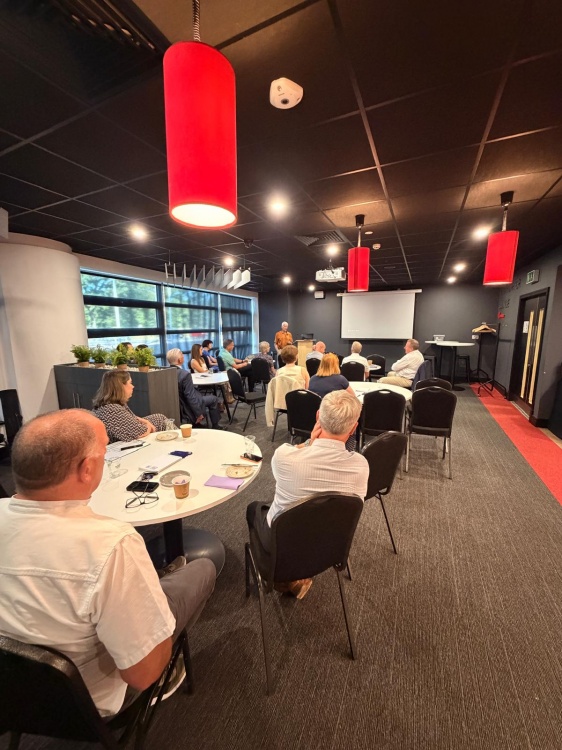
FEO members gathered at the MKM Stadium for a truly thought-provoking session, led by guest speaker Andy Eavis - a man whose life’s work spans both extraordinary underground exploration and high-level business leadership.
With more than 60 years dedicated to caving, Andy has explored and helped map some of the world’s most significant cave systems. His stories offered a rare glimpse into environments few people will ever see, combining adventure with scientific insight. Alongside this, his entrepreneurial journey - co-owning Thompson Plastics and growing it into a £42 million business employing 750 people before its sale in 2009 - added a compelling business dimension to his perspective.
Andy’s talk stood out not just for his achievements, but for how he has connected seemingly different worlds. His leadership roles, including serving as Chair of the British Caving Association and leading international expeditions, have positioned him uniquely at the intersection of science, environment, and enterprise.
This combination has enabled him to “join the dots” - translating observations from deep underground into meaningful insights about global environmental challenges.
Drawing on decades of cave research, Andy highlighted how cave sediments provide one of the most detailed long-term records of Earth’s climate. Referencing scientific work, including research linked to Oxford University, he explained that atmospheric CO2 levels have historically been closely tied to climate stability.
He noted that when CO2 levels dropped significantly around 10,000–12,000 years ago, the climate stabilised - enabling agriculture to flourish and human populations to grow. In contrast, higher CO2 levels have been associated with instability.
His message was clear: if we are to stabilise the climate again, we must significantly reduce atmospheric CO2 - and that will require large-scale carbon capture and storage, much of it underground.
Andy pointed to major energy transitions already underway. He referenced Drax, once Western Europe’s largest coal-fired power station, which has reduced its CO2 emissions by over 90% since 2012 and now produces a significant portion of the UK’s renewable electricity.
Looking ahead, technologies such as Bioenergy with Carbon Capture and Storage (BECCS) could enable “negative emissions” - actively removing carbon from the atmosphere. However, Andy also challenged the classification of biomass as entirely “clean,” urging a more critical and evidence-based approach.
He emphasised that as global demand for carbon capture grows, there will be significant opportunities for innovation and entrepreneurship in this space.
A key theme of the talk was the need to rethink waste. Andy highlighted that as countries become wealthier, waste production increases - making circular economy principles more important than ever.
He challenged common assumptions around materials, particularly plastics. While often criticised, he argued that so-called single-use plastics play an essential role in preserving food and reducing waste. The issue, he suggested, is not the material itself but the lack of effective recycling systems.
With the right infrastructure, incentives, and legislation, plastics could be fully recycled and repurposed into durable materials. He also questioned alternatives such as wooden cutlery, pointing out the environmental contradictions in their production and disposal.
Andy explored the evolving energy landscape, highlighting the importance of balancing renewable sources like wind and solar with controllable energy systems such as biomass, storage, and emerging technologies.
He discussed the growing potential of hydrogen, particularly as a way to utilise excess renewable energy, and the role of energy-from-waste facilities like Enfinium. These facilities, he noted, must evolve into decarbonised hubs capable of capturing carbon while producing energy.
At the same time, he stressed that the ultimate goal should be reducing waste overall - meaning fewer such plants may be needed in the future.
The scale of the challenge ahead is significant. Andy pointed to global efforts, including initiatives like Elimini in North America, which aim to remove carbon at a megatonne scale. However, he was clear that far more needs to be done.
Addressing climate change will require coordinated action - combining government policy, financial incentives, and private sector innovation.
Following the talk, FEO Director Thomas Martin described it as “one of the most powerful presentations” since the organisation’s founding.
“What made it so impactful was not just the content, but the perspective. Andy Eavis has seen parts of the world few others have - and used that insight to better understand the challenges facing our planet.
His message was both sobering and inspiring: by combining knowledge, innovation, and practical action, there is still an opportunity to reshape the future of our “little blue marble.”
To find out more about joining FEO, please click the link HERE.








Email:
info@forentrepreneursonly.co.uk
Address:
For Entrepreneurs Only Quarry House, Hesslewood Office Park, Hessle, East Yorkshire, HU130LH